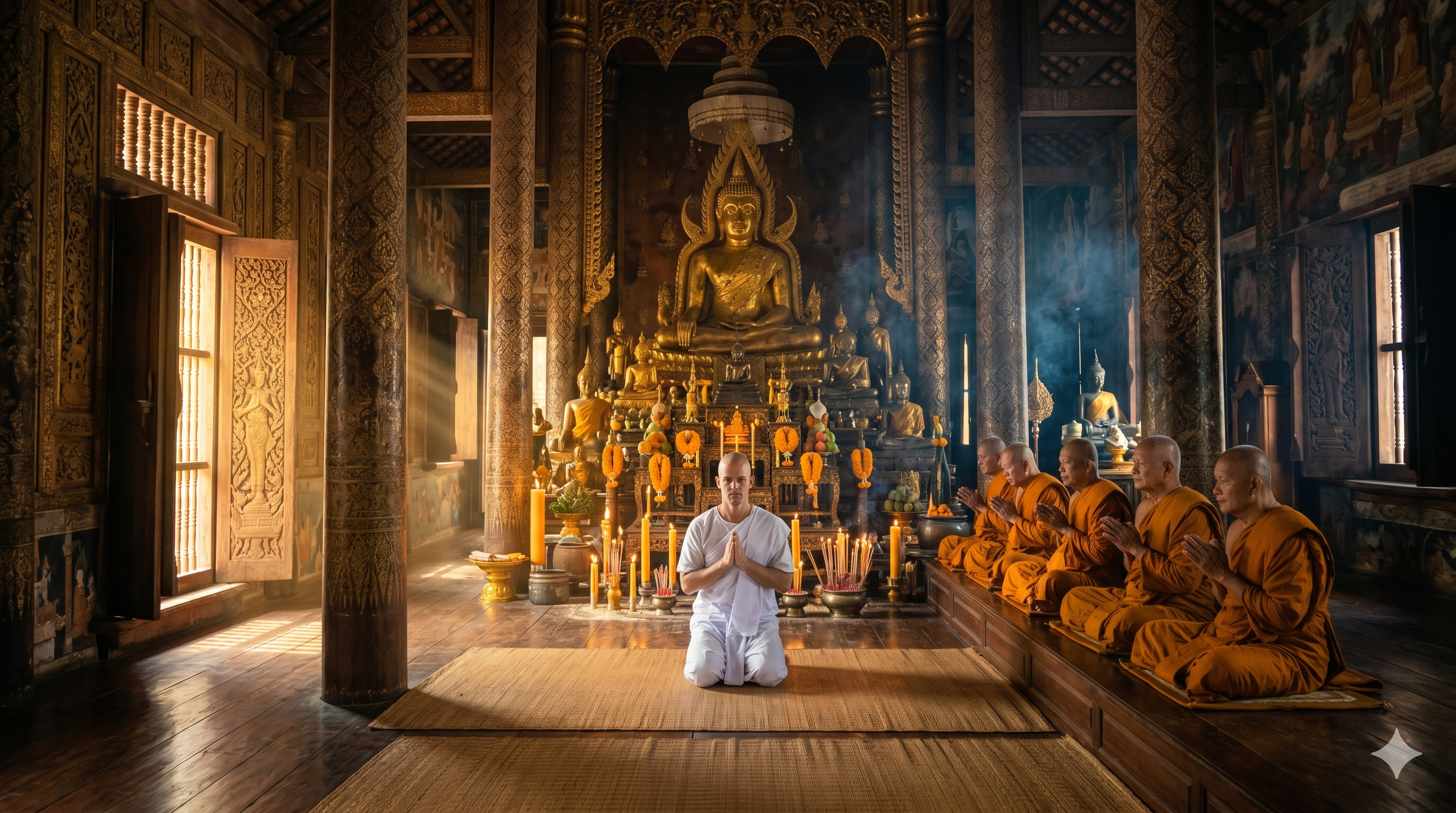

How to Ordain a Foreigner as a Monk in Thailand
For centuries, the saffron robe of a Theravada Buddhist monk has been one of the most recognisable symbols of spiritual life in Thailand. Today, this path is not limited to Thai citizens alone. Each year, a growing number of foreigners — drawn by genuine faith, deep curiosity, or a desire for transformation — undertake the ancient ordination ceremony and enter monastic life in the Thai Buddhist tradition. The process is open, welcoming, and profoundly meaningful, but it requires careful preparation, the right guidance, and a sincere commitment to the life it represents.
Who Can Be Ordained — The Basic Eligibility Requirements
The Thai Sangha welcomes foreign candidates — provided they meet both spiritual and practical requirements.
Thai Buddhist monastic law, governed by the Mahatherasamakom — the Council of Elders — permits foreigners to receive full ordination as bhikkhu (monks) or to enter the novice stage as samanera. The core eligibility requirements are consistent regardless of nationality. The candidate must be male, as the Thai Theravada tradition does not currently ordain women as fully ordained nuns. He must be at least 20 years of age for full ordination, or at least 7 for novice ordination when accompanied by a guardian's consent.
Beyond age, the candidate must be in good physical and mental health, free from infectious diseases, not in debt that he is actively evading, and not serving in the military. He must not have committed serious crimes and must come with genuine spiritual motivation. Importantly, he must not be under the influence of addiction at the time of application. These requirements mirror those applied to Thai candidates and reflect the Vinaya — the ancient monastic code — which has governed Buddhist ordination for over two thousand years.
Choosing the Right Temple and Finding a Preceptor
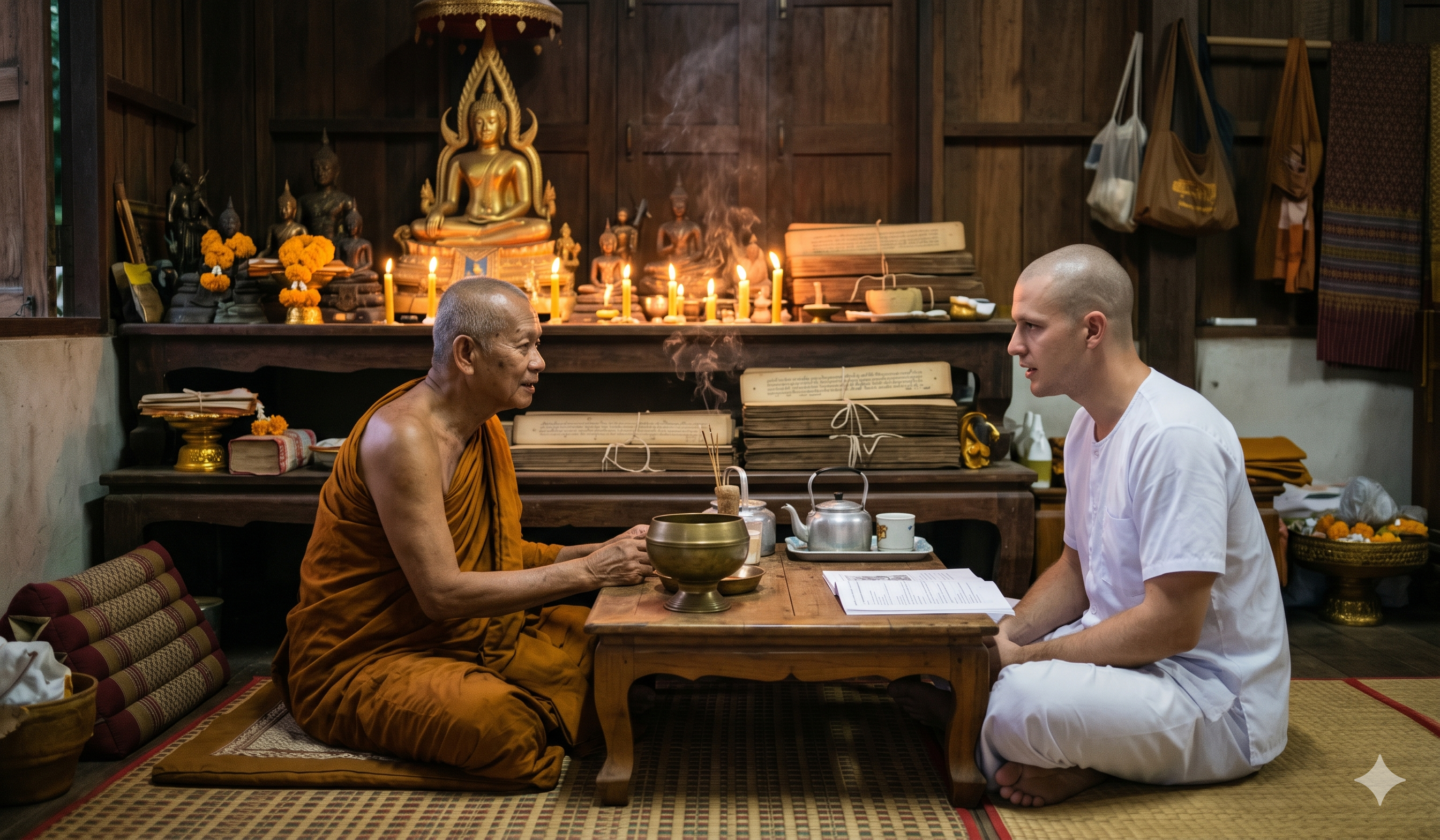
The relationship between the candidate and his preceptor is the spiritual foundation of the entire ordination.
The first practical step for any foreigner seeking ordination is finding a suitable temple and an abbot willing to accept and sponsor him. Not all Thai temples are equipped or staffed to guide foreign candidates — language barriers, administrative complexity, and the demands of the ordination process mean that some monasteries are simply better suited to this role than others. Several temples in Thailand have developed strong reputations for welcoming and supporting international monks, particularly in Chiang Mai, Bangkok, and the forest monastery tradition of the northeast.
The most well-known among these include Wat Suan Dok and Wat Chedi Luang in Chiang Mai — both of which run structured programmes for foreigners — and the International Dhamma Hermitage in Surat Thani. In the forest tradition, monasteries in the lineage of Ajahn Chah and Ajahn Mun offer rigorous but deeply respected ordination pathways. The candidate should visit the temple in advance, spend time as a guest or lay volunteer, and develop a genuine relationship with the abbot who will serve as his upajjhaya — the preceptor who formally confers the ordination.
Visas, documents, and the official registration process for foreign monk candidates.
Once a temple and preceptor have agreed to accept the candidate, the administrative process begins. Foreigners ordaining in Thailand must hold a valid visa. Many temples assist candidates in applying for a Non-Immigrant B visa or a religious visa, which can be extended for the duration of the ordination period. Overstaying a tourist visa while ordained is not acceptable and can create legal complications for both the monk and the sponsoring temple.
The required documents typically include a valid passport with at least six months of remaining validity, a health certificate from a licensed physician confirming the candidate is free from the specified diseases listed in Vinaya disqualifications, a letter of consent from parents or next of kin, and in some cases, a criminal background check from the candidate's home country. The temple submits these documents to the local ecclesiastical authority — the chao khana changwat — who must formally approve the ordination before it can proceed.

The ordination ceremony itself — what happens inside the sima hall on the day.
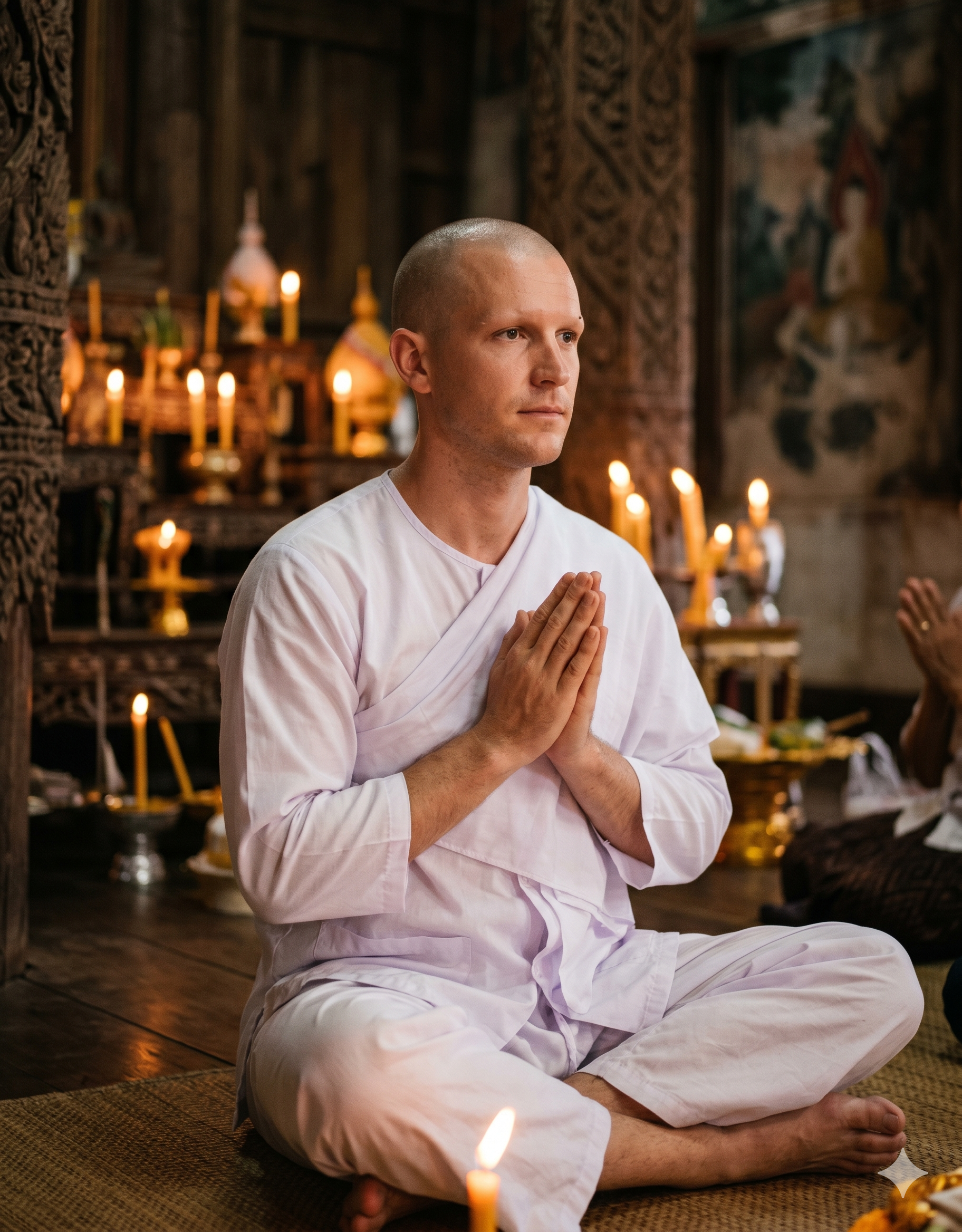
The full ordination ceremony — upasampada — takes place within the sima, a consecrated boundary hall whose walls have been ritually established to contain and amplify the power of the monastic act performed within them. The candidate arrives having already shaved his head and eyebrows, dressed in white lay clothing. He proceeds through a series of graduated stages: first requesting to take the Three Refuges and Five Precepts, then being formally presented to the assembled Sangha of at least five fully ordained monks — the minimum required to confer valid ordination in Theravada tradition.
The senior monk questions the candidate aloud on each of the standard disqualifications, and the candidate must answer clearly and truthfully in Pali — the ancient sacred language of Theravada scripture. The assembly of monks then votes in silence through a formal process of announcement and consent. When no objection is raised after three announcements, the ordination is considered complete. The new monk receives his saffron robes, his alms bowl, and his monastic name — typically a Pali name chosen by his preceptor — and enters the Sangha as a fully ordained member of the Buddhist monastic community.

Life After Ordination — Rules, Daily Routine, and Disrobing
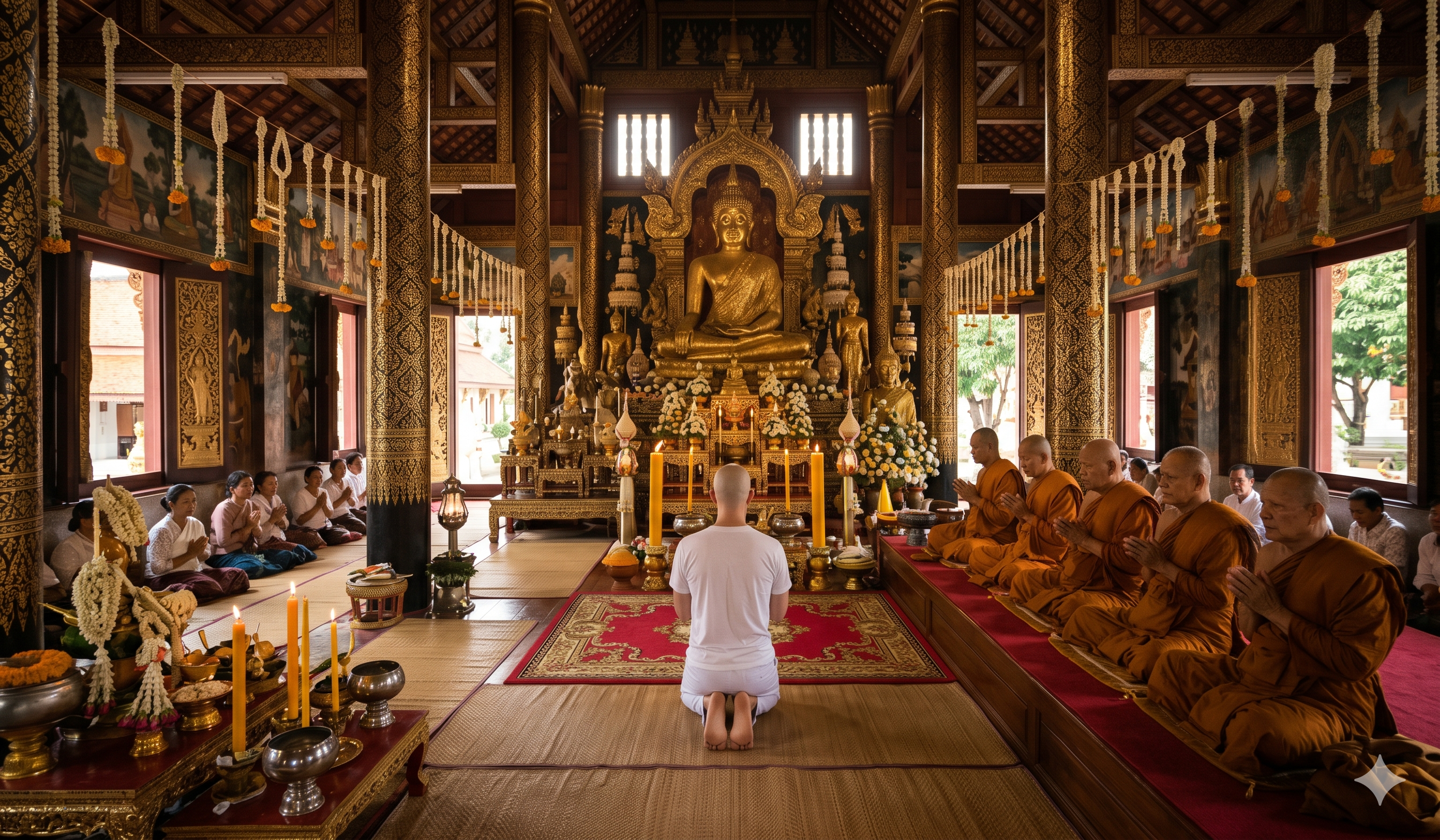
Monastic life in Thailand follows a structured daily rhythm governed by 227 rules of the Patimokkha.
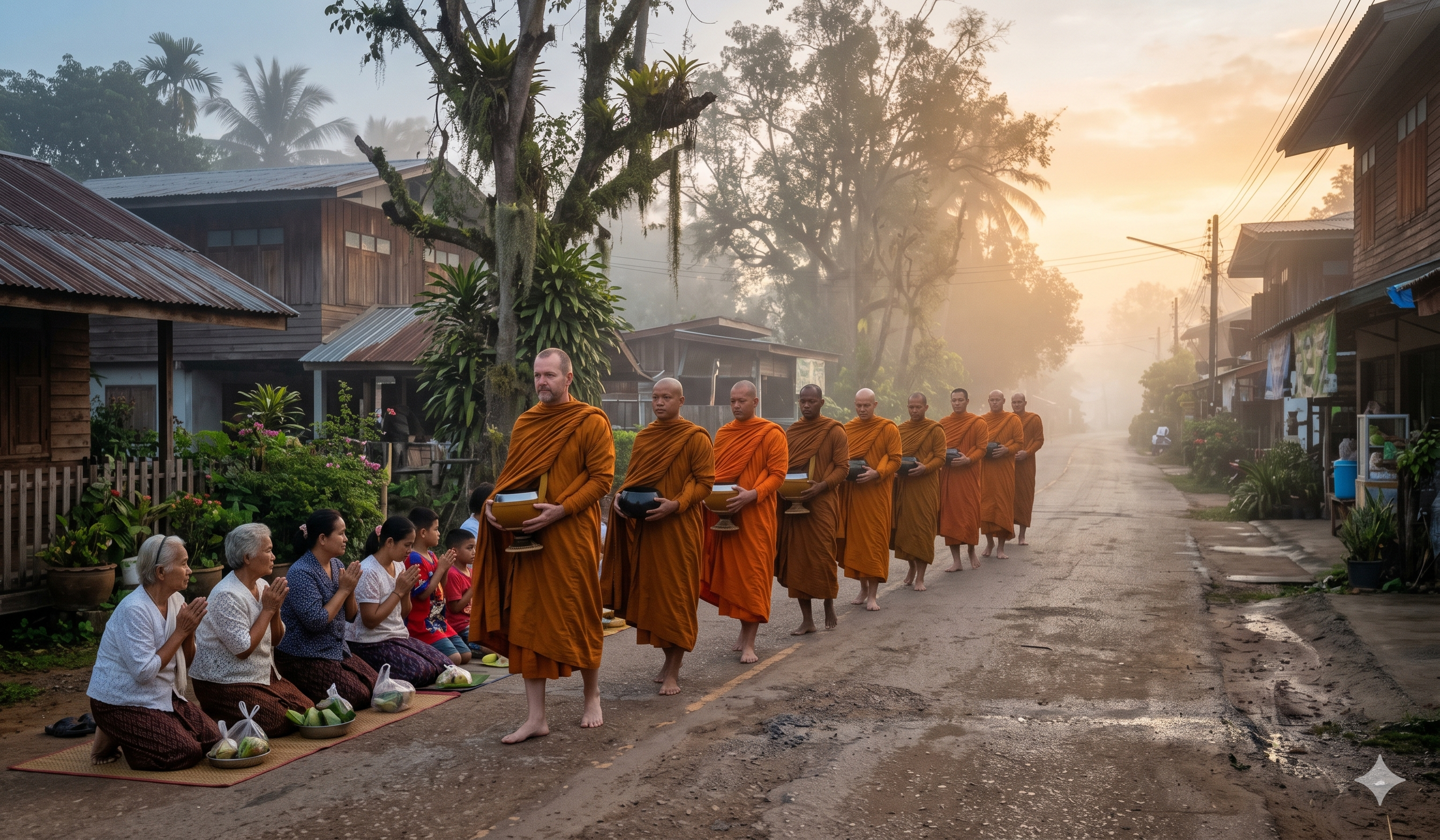
Once ordained, a foreign monk lives by the same 227 rules of the Patimokkha — the monastic code — as all other Theravada monks worldwide. The day begins before dawn with the alms round (bintabat), walking barefoot through the community as lay people offer food into the alms bowl. Meals are taken only in the morning, before noon. Afternoons and evenings are devoted to meditation, Dhamma study, chanting, and service to the temple community.
There is no fixed minimum period of ordination required of foreigners. Some ordain for a week, others for months or years, and some choose to remain monks for life. The Thai tradition understands disrobing — formally leaving the monkhood — as a clean and culturally accepted act, carrying no stigma. A monk who wishes to leave simply informs his preceptor and community, hands back his robes, and returns to lay life. Whatever the duration, the experience of ordination is widely understood — by monks and laypeople alike — to mark a person permanently and beneficially, leaving behind merit, discipline, and a deepened understanding of the path.
Sawasdee! I'm a freelance writer dedicated to uncovering the vibrant soul of Thailand. From the bustling streets of Bangkok to hidden cultural gems and local culinary wonders, I craft engaging stories that bring the Thai experience to life.
All author postsRelated posts
-
The Ceremony of Bathing Buddha Images for Good Fortune on Songkran Day.
A sacred ritual of purification, merit-making, and the blessing of good fortune for Thai New Year..
-
Beliefs Surrounding Cremation Ceremonies in Thailand.
Explore the profound spiritual beliefs and rituals of Thai Buddhist cremation ceremonies..
-
Religion and Beliefs of the Lanna People in Northern Thailand.
From ancient animism and Theravada Buddhism to sacred rituals and protective spirits..


4 Comments
-
Herman Miller Reply17 July 2020, 6:05 PM
Lorem ipsum is simply dummy text of the printing and typesetting industry. Lorem ipsum has been the industry's standard dummy text ever since the make book.
-
Wilbur Haddock Reply18 July 2020, 10:19 PM
Lorem ipsum is simply dummy text of the printing and typesetting industry. Lorem ipsum has been the industry's standard dummy text ever since.
-
Colene Landin Reply18 July 2020, 12:39 PM
Lorem ipsum is simply dummy text of the printing and typesetting industry. Ipsum has been the industry's standard dummy text.
-
-
Jennifer Freeman Reply19 July 2020, 8:25 PM
Lorem ipsum is simply dummy text of the printing and typesetting industry. Lorem ipsum has been the industry's standard dummy text ever since the make a type specimen book.
Write a comment